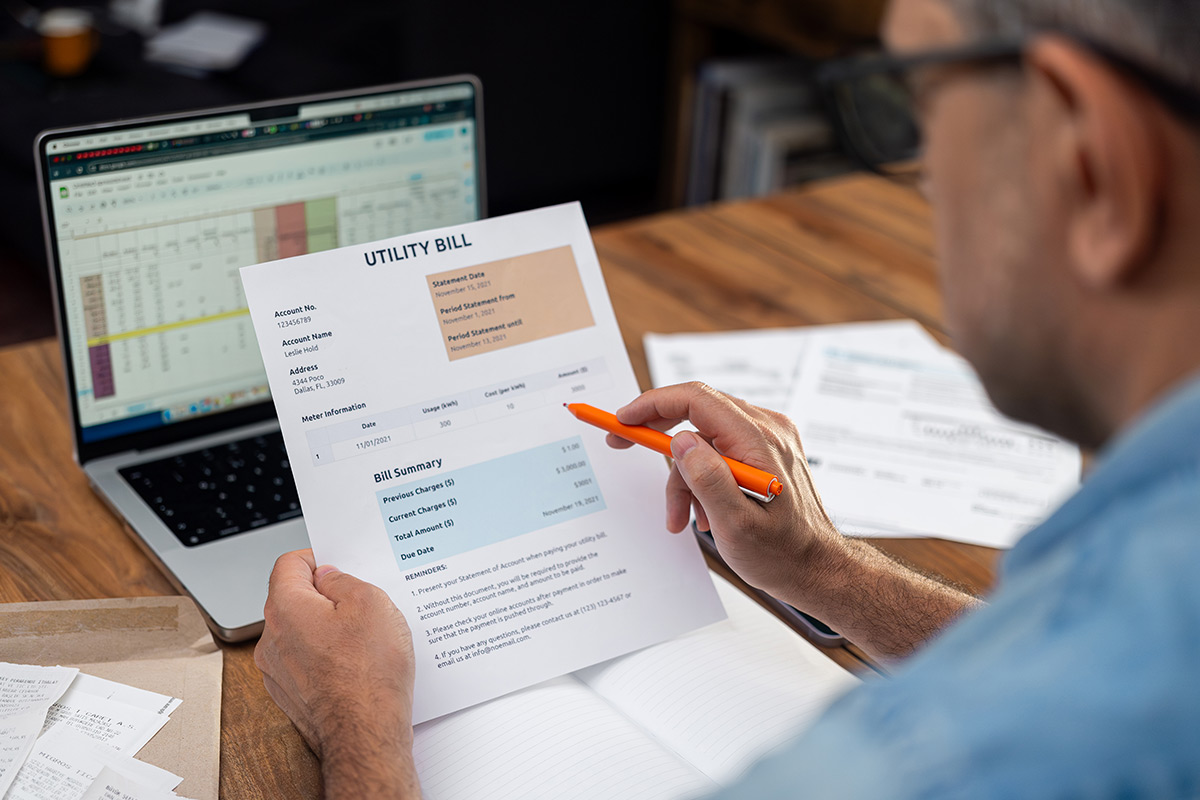



For many Florida business owners, the monthly utility bill is viewed as a fixed cost—an inevitable tax on doing business in the Sunshine State. However, if your facility is running on a legacy HVAC system (10+ years old), that bill isn’t a fixed cost; it’s an efficiency tax.
With the latest advancements in Allied Commercial Rooftop Units (RTUs), the transition from “limping along” with an old system to upgrading to modern technology isn’t just about comfort—it’s about a rapid and measurable Return on Investment (ROI).
The SEER2 and IEER Revolution
In 2023, the industry moved to more rigorous testing standards (SEER2). Allied Commercial has not just met these standards but exceeded them. Legacy systems often operate at a SEER rating of 10 or lower. Modern Allied units can reach ratings significantly higher, often resulting in a 30% to 50% reduction in energy consumption for the same cooling output.
- The Data Point: For a medium-sized retail space in Orlando, a 40% reduction in HVAC energy consumption can translate to thousands of dollars in annual savings, directly impacting the Net Operating Income (NOI).
Part-Load Efficiency: Where the Real Savings Live
Most HVAC systems spend the majority of their time running at “part-load”—not at 100% capacity. Legacy units are often binary: they are either 100% on or 100% off.
- The Allied Advantage: Allied systems utilize multi-stage or variable-speed compressors. This allows the unit to modulate its output to match the actual demand of the building. By avoiding the “massive surge” of power required to start a legacy compressor repeatedly, Allied units maintain a consistent, low-draw energy profile.
The “Payback Period” Strategy
As a business owner or facility manager, the primary question is: “How long until this pays for itself?” Through the consulting expertise of Oldach, we help you calculate the “Payback Period.” When you factor in:
- Energy Savings: The immediate drop in your monthly FPL or Duke Energy bill.
- Maintenance Avoidance: The elimination of “emergency” repair costs associated with legacy units.
- Tax Incentives: Potential Section 179 deductions or local energy rebates for high-efficiency upgrades.
In many cases, the energy savings alone can pay for the equipment cost in as little as 3 to 5 years, after which the system begins generating “pure profit” in the form of reduced overhead.
Precision Humidity Management
In Florida, a unit that doesn’t manage humidity effectively forces the thermostat to be set lower just to achieve “comfort,” which wastes electricity. Allied’s advanced dehumidification cycles ensure the air feels cooler at higher temperatures, allowing you to raise your setpoint by 2-3 degrees without sacrificing comfort—further slashing your utility draw.
Local Support, Maximum Up-Time
Efficiency is also measured in time. Because Oldach maintains strategic hubs in Orlando, Kissimmee, and Tampa, your path to an efficient upgrade is streamlined. We provide the technical data and local inventory to ensure your retrofit happens quickly, letting you start capturing those energy savings immediately.
Stop Subsidizing Inefficiency
Every month you delay an upgrade is a month you are overpaying for your climate control. By transitioning to an Allied Commercial system, you are replacing a liability with an asset.
Work with Oldach to perform an energy audit of your current facility. Let’s look at the data, calculate your ROI, and start putting that “utility tax” back into your company’s bottom line.